
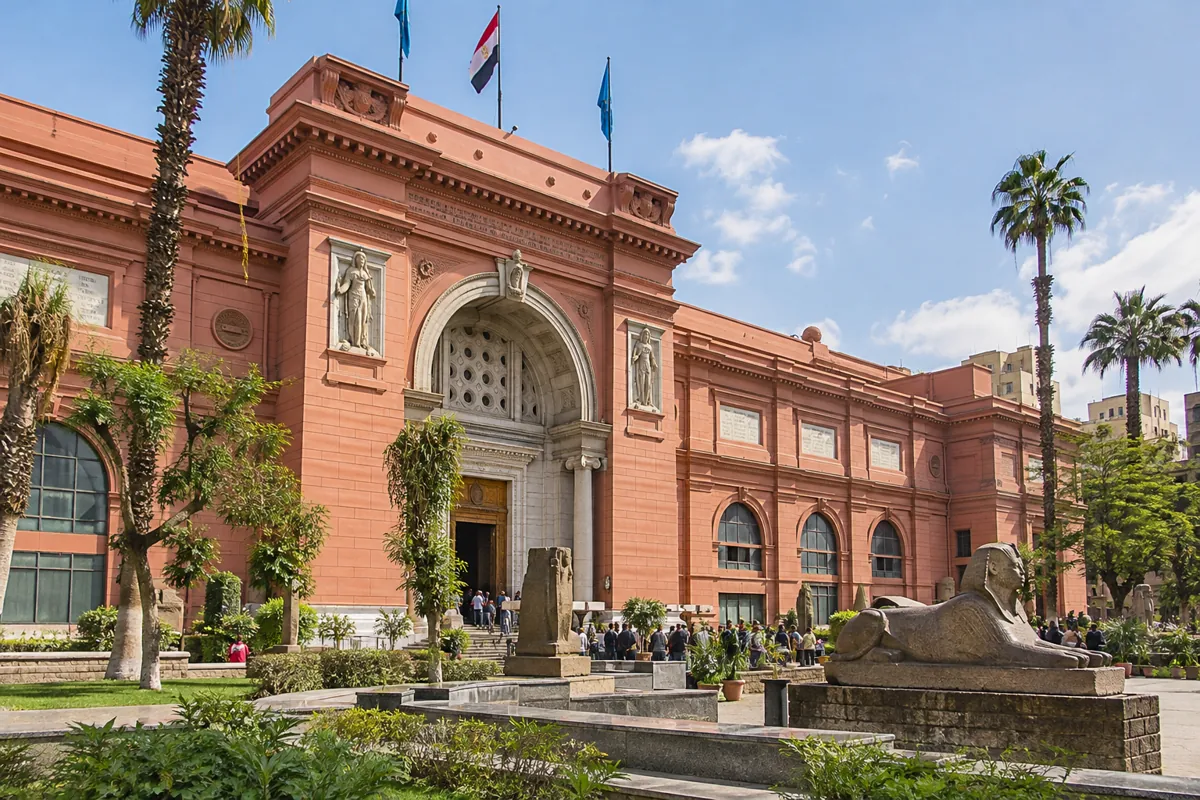
The Egyptian Museum in Tahrir Square holds important collections of ancient Egyptian material. Distinguish it from the Grand Egyptian Museum’s Tutankhamun galleries and NMEC’s Royal Mummies Gallery before planning your visit.
Tutankhamun's golden mask: The mask is currently listed in the Grand Egyptian Museum’s official collection; do not rely on older descriptions placing it in Tahrir.
The Royal Mummies Hall: The Royal Mummies Gallery is at the National Museum of Egyptian Civilization in Fustat, a separate institution from Tahrir.
Other key pieces: statues and artifacts spanning periods from the Old Kingdom through the Ptolemaic era.
Location: The museum is in Tahrir Square in central Cairo. Plan additional stops around their own locations, tickets, travel and walking time.
If you're planning to visit the museum alongside other sites in one day, a private car tour gives you the flexibility to move between them within the agreed route, duration and waiting arrangement.
Which museum do you need for Tahrir, Tutankhamun or royal mummies?
Before booking a Cairo museum visit, separate three destinations that older guides sometimes combine. The Egyptian Museum stands in Tahrir Square. The Grand Egyptian Museum is near Giza and has the Tutankhamun galleries, including the burial mask listed in its official collection record. The National Museum of Egyptian Civilization in Fustat has the Royal Mummies Gallery. These are separate institutions, not different rooms reached with one admission ticket.
That distinction is the first practical answer to a visitor looking for Tutankhamun in Cairo. Do not book a car to Tahrir solely because an old article places the mask there. Equally, do not assume that the Egyptian Museum has lost its value because particular collections moved. Choose the museum for the objects and historical questions you want to explore, then confirm its current displays and visitor arrangements before paying for admission or transport.
Why visit the Egyptian Museum in Tahrir now?
The Egyptian Museum remains a major place to study ancient Egyptian art and material culture. The Ministry's museum description highlights objects and groups such as the Narmer Palette, the burials of Yuya and Thuya and the treasures of Tanis. A useful visit is not a search for one missing headline object; it is an opportunity to compare evidence from different periods and contexts within a significant collection.
Choose a theme that interests you: the representation of kingship, the relationship between objects and burial, materials and craftsmanship, or changes in sculpture. A theme helps you make connections between displays without trying to memorise a complete chronology in one visit. Pick several objects to examine closely and read their labels. Their purpose, material and original context often explain more than the fact that they look impressive or appear in a familiar travel photograph.
Looking at the Narmer Palette
The museum's Early Dynastic collection information discusses the Narmer Palette in relation to royal power and the unification of Egypt. It is a good starting point for asking how images communicate authority. Look at the organisation of the scenes and the differences in scale rather than treating the surface only as decoration. The way a person is represented can be part of the message.
Keep a distinction between what you can observe and what an interpretation argues. You can notice size, arrangement and repeated imagery directly; explaining an event or political meaning requires context. A guide can help separate those levels. This approach is useful throughout the museum because an ancient image is not always a straightforward photograph-like record of a single moment. Its purpose and audience matter when deciding what it can tell us.
Sculpture and the representation of a ruler
The museum's record for the statue of Khafre identifies it as a major work of ancient Egyptian sculpture. Use it as an opportunity to consider posture, material and the way the figure presents a ruler, not simply as another image of a king connected with the Pyramids. Look from the permitted viewing positions and read the explanation before reducing every feature to a symbolic claim.
Then compare a different sculpture rather than assuming all royal statues work in the same way. What changes in the face, stance, scale or intended setting? What does the label say about date and findspot? Comparison does not require ranking one object as better than another. It helps you understand how an artistic choice can respond to purpose and context, and it makes a short selected route more memorable than a rapid tour of many cases.
Burial groups are more than a collection of precious things
When examining a burial group, ask how the objects relate to one another. Some belonged to personal identity or use, while others formed part of the funerary arrangement. Materials and decoration are meaningful, but so are the object's function and position within a larger group. Resist the temptation to describe every gilded object as treasure without asking what it was made to do.
The Yuya and Thuya material provides a reason to think beyond a single famous royal tomb. Follow the current museum labels and ask what evidence supports the explanation being offered. If a particular group is central to your plan, confirm its present availability through the museum before visiting. A collection listed in a museum description is not an unconditional guarantee that every individual object will be visible on every date.
How to choose between Tahrir, GEM and NMEC
For a visitor focused specifically on Tutankhamun's display, start with the Grand Egyptian Museum's current gallery and ticket information. For the Royal Mummies Gallery, check NMEC's arrangements in Fustat. For the Egyptian Museum in Tahrir, plan around its own collection and interests. This is a choice of destination and content, not a competition in which one institution makes the others unnecessary.
If time allows more than one museum, give each a clear purpose. Seeing a sculpture theme in one place and a different collection elsewhere can be worthwhile; repeating long unfocused circuits while tired is less useful. Do not assume they are adjacent or share entry conditions. Confirm each location in the transport itinerary and allow for leaving, travelling, entering and taking a break between visits.
Admission, photography and comfortable pacing
Check current official visitor information for the date, category, opening and last admission. Avoid relying on ticket prices copied from an old post, particularly one that still places the royal mummies in Tahrir. Prepare any required proof of eligibility and keep your ticket available offline. General entry, specialist activities and guiding should be understood separately; a transport quotation does not determine museum admission conditions.
Follow the rules for photography and equipment at the museum and any restrictions within individual areas. Ask before photographing other visitors closely. Travel with manageable personal belongings, discuss storage if coming with suitcases and plan a route suited to the group. Children and older travellers may enjoy a shorter selection with time to talk about objects more than a long circuit completed without rest.
A realistic museum day in central Cairo
A Tahrir visit can form the main activity of a day, followed by one carefully selected stop if the group still has energy. Decide the second activity in advance but leave room to shorten it. A museum visit involves concentration as well as walking; being indoors does not make it effortless. Include time to leave the building, gather the group and reach the vehicle before scheduling another appointment.
If you want to continue to Khan el-Khalili, organise its separate walking and collection arrangements. If you want the Grand Egyptian Museum instead, recognise that it changes the day's geography and admission planning. A flexible transport arrangement still needs agreed hours, distance and stops; it does not turn a full list of attractions into an unlimited day.
Booking the correct vehicle journey
Send the museum's full name, location, pickup address, date, group size and luggage. Tell the provider about mobility needs and whether you want a single transfer, a return appointment or a defined car-and-driver period. Confirm a permitted meeting point and the contact process for the end of the visit. Do not rely on an ambiguous request for the Cairo museum when the whole purpose is to reach a particular collection.
General Limousine's day-hire options include eight hours with up to 120 kilometres or twelve hours with up to 150 kilometres, normally starting at boarding. Confirm the quotation and any extra use for the actual route. Guiding, tickets and activities are separate unless explicitly included. A clear agreement should give the museum visit enough room without promising unrestricted waiting or an undefined return time.
Questions about the Egyptian Museum and Tutankhamun
Is Tutankhamun's mask still the reason to book Tahrir?
The current GEM collection record places the mask in its Tutankhamun galleries. Verify the intended display and book the correct museum. Older descriptions that use the mask to direct visitors to Tahrir should not determine your journey.
Are the royal mummies a separate room in Tahrir?
The Royal Mummies Gallery is at the National Museum of Egyptian Civilization in Fustat. Check that institution's current visitor information. Do not buy a Tahrir ticket expecting it to establish entry to NMEC.
Is Tahrir still worthwhile without those headline collections?
Yes, when its own material matches your interests. Plan a selected route around the collection rather than treating it as an incomplete version of another museum. The value comes from the objects and context you explore.
Can a driver explain the collections inside?
Historical guiding is a separate arrangement. If you need it, confirm the guide, language, meeting point and scope. The vehicle booking alone does not establish that a specialist will accompany you inside.